|
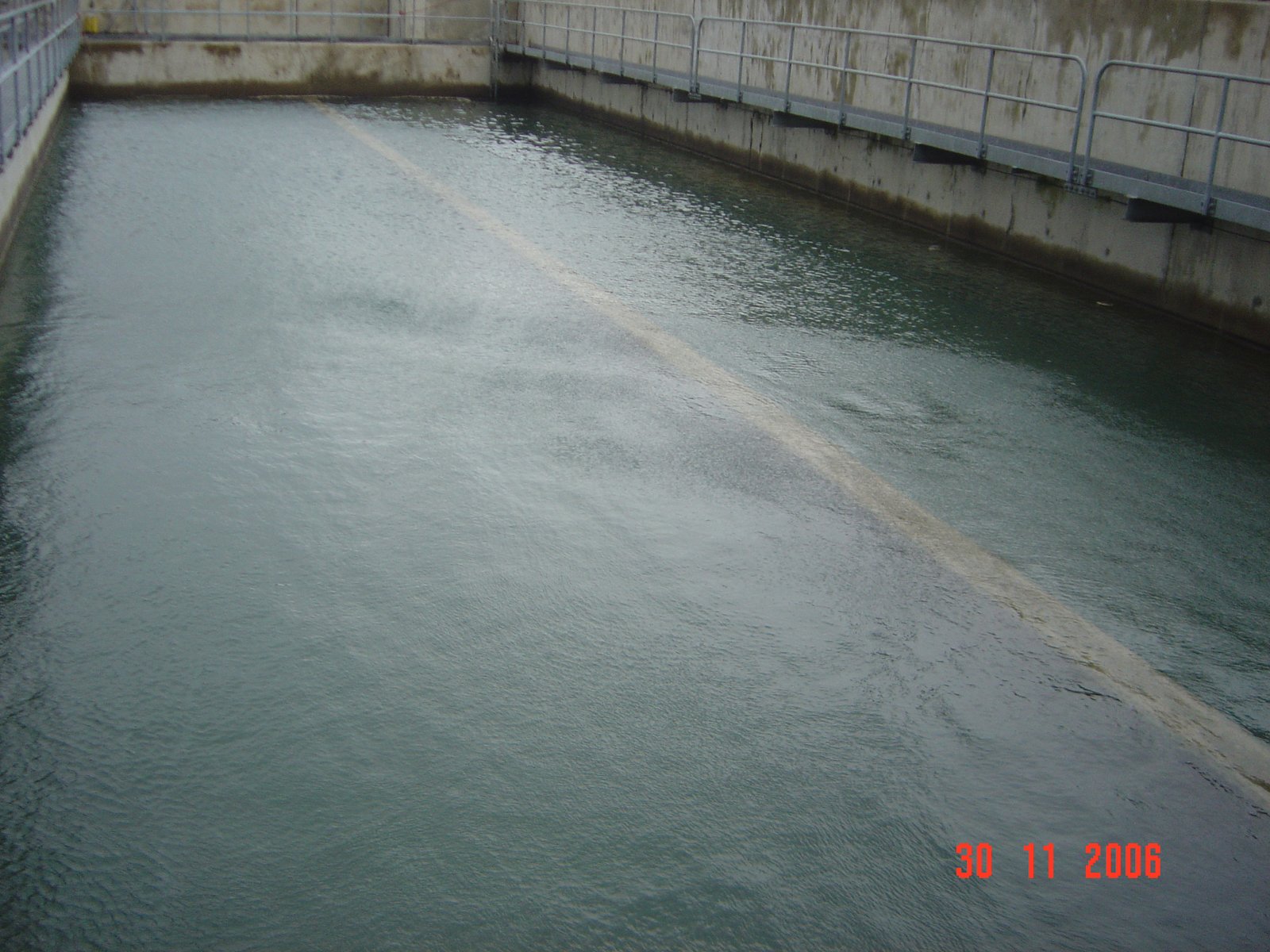
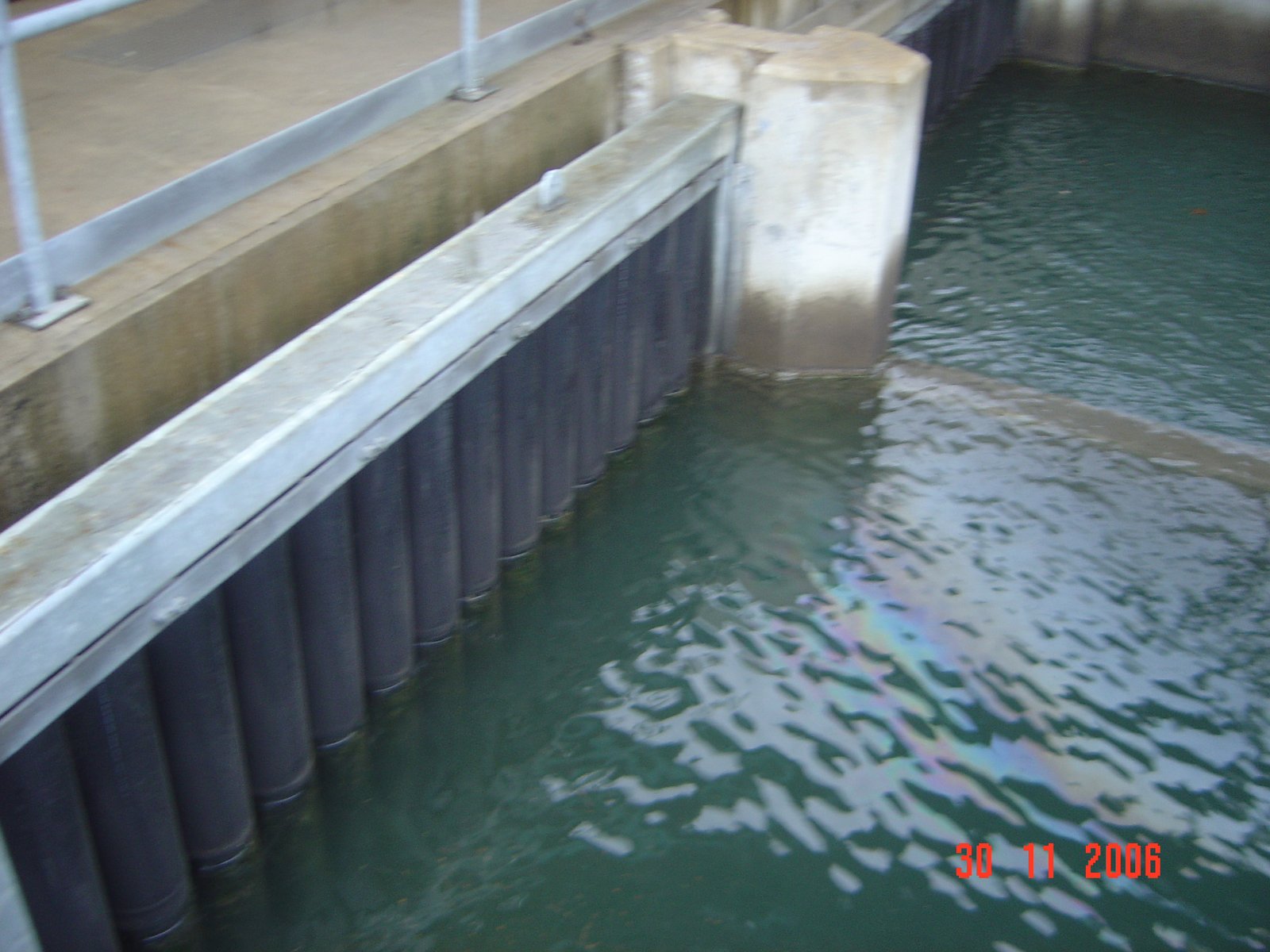
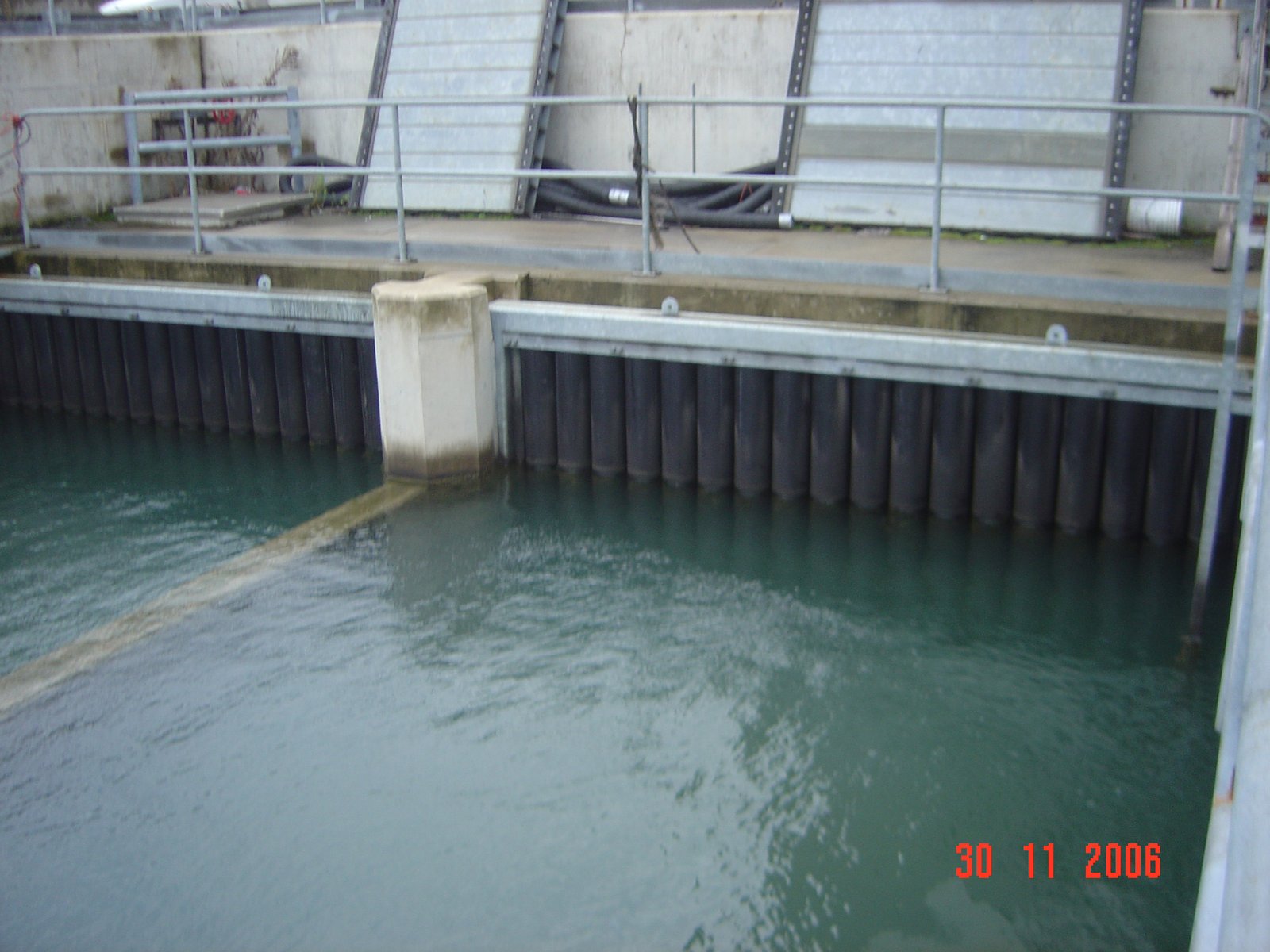
API style oil-water separator - the theory American Petroleum Institute (API) established a procedure for designing gravity oil-water separator (OWS) in year 1969, which quickly became widely accepted methodology of designing gravity oil-water separators. Classic API style OWS is an in-ground multi-channel establishment. For a large site with multiple oil equipment, this arrangement is a cost effective solution. API style OWS is based on Stokes' Law:
Vt = (g/18p)(Pw -Po)*D^2
Where:
Vt = rise rate of the design oil globule, in centimeters per second.
g = acceleration due to gravity, = 981 centimeters per second squared. p = absolute viscosity of wastewater at the design temperature, in poise. Pw = density of water at the design temperature, in grams per cubic centimeter. Po = density of oil at the design temperature, in grams per cubic centimeter. D = diameter of the oil globule to be removed, in centimeters. Free oil, as defined by API for oil globules with diameter greater than 0.15 millimeters (150 microns), account for 99.99 percent of the oil content in a non-emulsified oily water. If this portion of oil is removed, the water will have less than 15 ppm of oil content and be safe to discharge to the environment. > 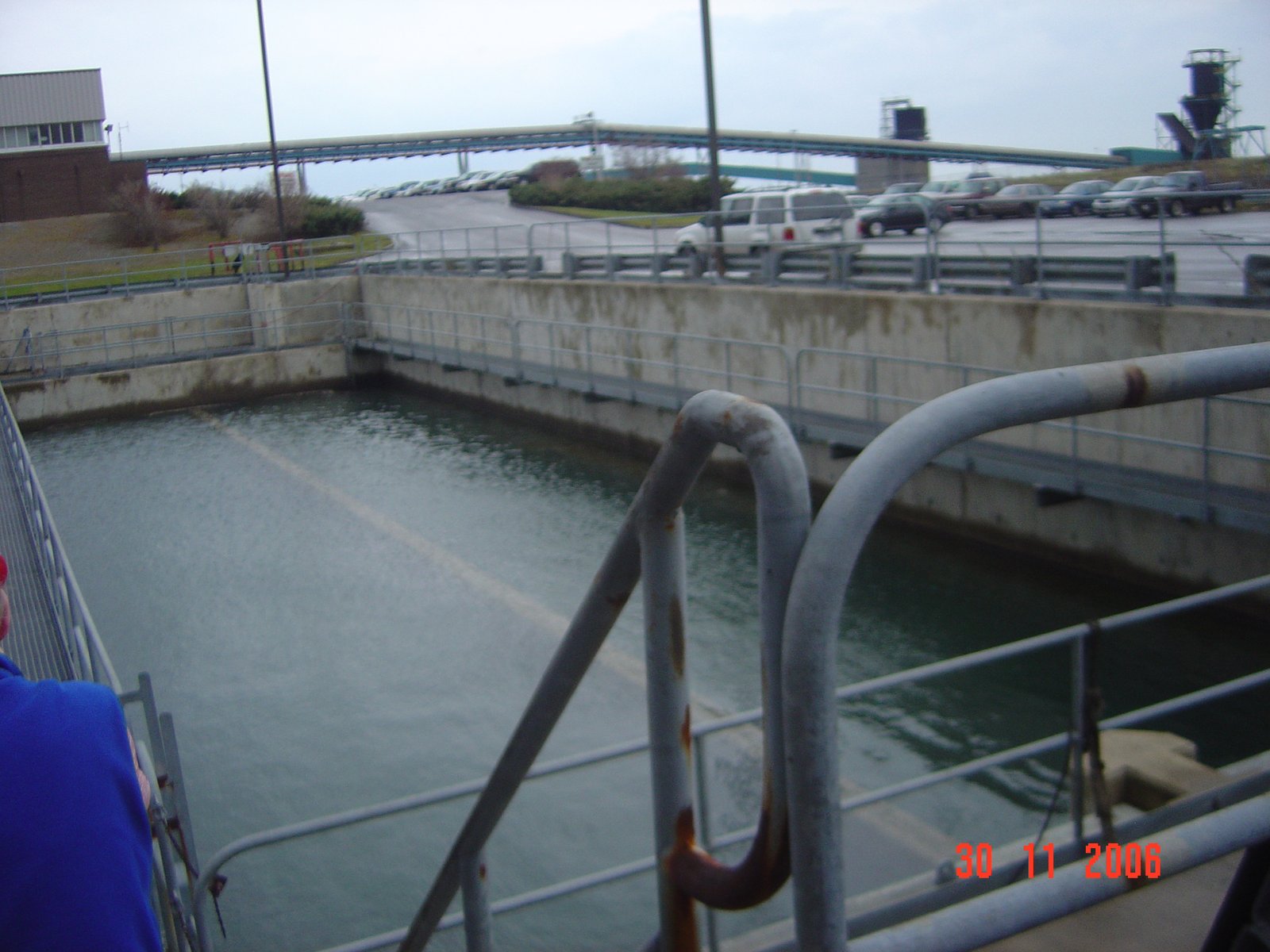
|
|
|
Oil-Water Separator sizing considerations 1. Plan and Vertical Dimensions a, If the depth (H) of the OWS can be determined based on economical considerations, the time for oil globules rising to the surface can be calculated: To=H/Vt b, The horizontal flow velocity Vh must be less than 15Vt or 3 ft/min, whichever is smaller. c, With this horizontal flow velocity determined, and the time for oil rising to surface calculated, the length of the OWS can be calculated as L=Vh*To d, If the flow rate is known, then the width of the channel can be calculated W=Q/H/Vh e, If the width of the channel is known, then the allowable flow rate can be calculated as Q=Vh*(H*W) 2. Inlet and Outlet a, Inlet should be baffled to minimize turbulence, and to allow for initial sediment settling. A sediment trap is also recommended. b, Outlet should be placed above sediment layer and allow for treated water to discharge. c, Oil baffle should be placed on or ahead of the outlet. 
|